
The Rise of Preventative Healthcare
One of the best parts of my job as a personal trainer is the conversations I get to have every day. My clients are generally health-aware, curious, and often ahead of the curve when it comes to new ideas in fitness and wellbeing. I’m constantly learning through them. That’s how I first heard about Neko Health.
A client mentioned it in passing, speaking highly of the experience. What caught my attention wasn’t just the glowing reviews, but the waitlist – nearly a year long. That alone made it feel like something worth paying attention to.
So I signed up… and completely forgot about it.
Over a year later, I got the email: I could finally book my scan. This blog is an honest reflection of that experience – what it is, what it feels like, and whether it’s actually worth it.
What is Neko Health?
Over the last few years, there’s been a noticeable shift in how we think about health.
Instead of waiting for something to go wrong, more people are becoming proactive and curious about what’s happening beneath the surface. There’s real power in understanding your body early, spotting potential issues sooner, and using data to guide long term decisions.
That’s exactly where Neko Health positions itself.
Founded in 2018 by Daniel Ek and Hjalmar Nilsonne, the Swedish health-tech company is rethinking the traditional medical check-up. Using advanced scanning technology, sensors, and data analysis, it aims to create a fast, comprehensive snapshot of your health.
During a scan, your body is analysed through a combination of thermal imaging, high-resolution photography, cardiovascular measurements, and blood testing. In just a few minutes, millions of data points are collected, from skin health and blood vessels to heart function and metabolic markers.
Afterwards, you sit down with a doctor who walks you through everything, explaining your results and highlighting anything that may need further attention.
As longevity physician Peter Attia puts it, “It’s not preventive medicine, it’s proactive medicine.”
The Experience
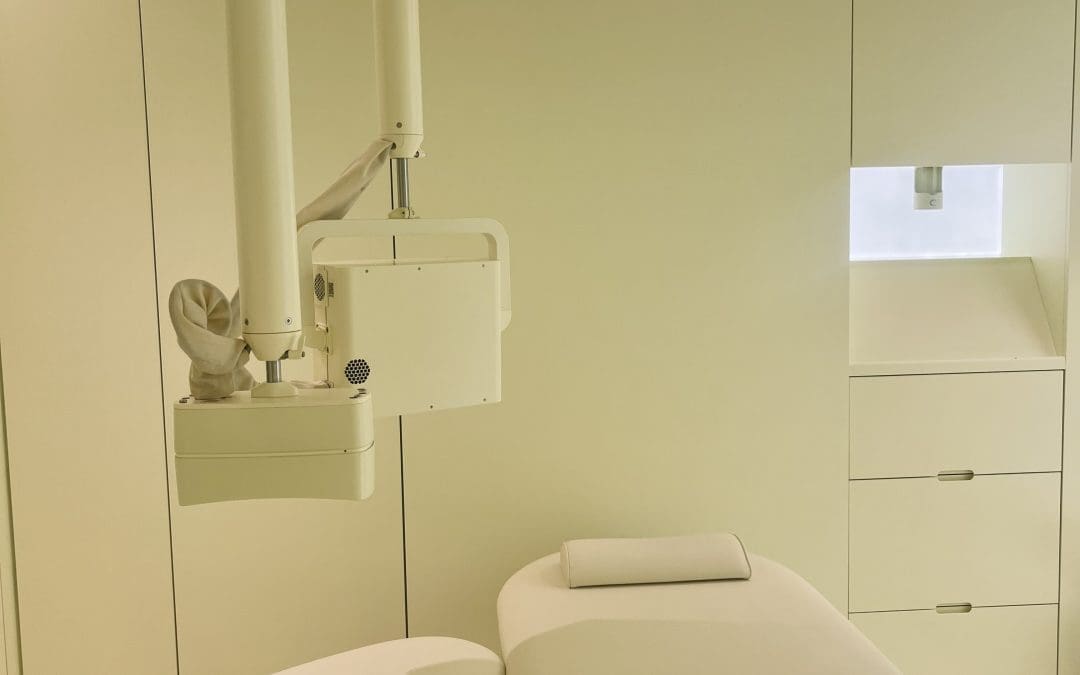
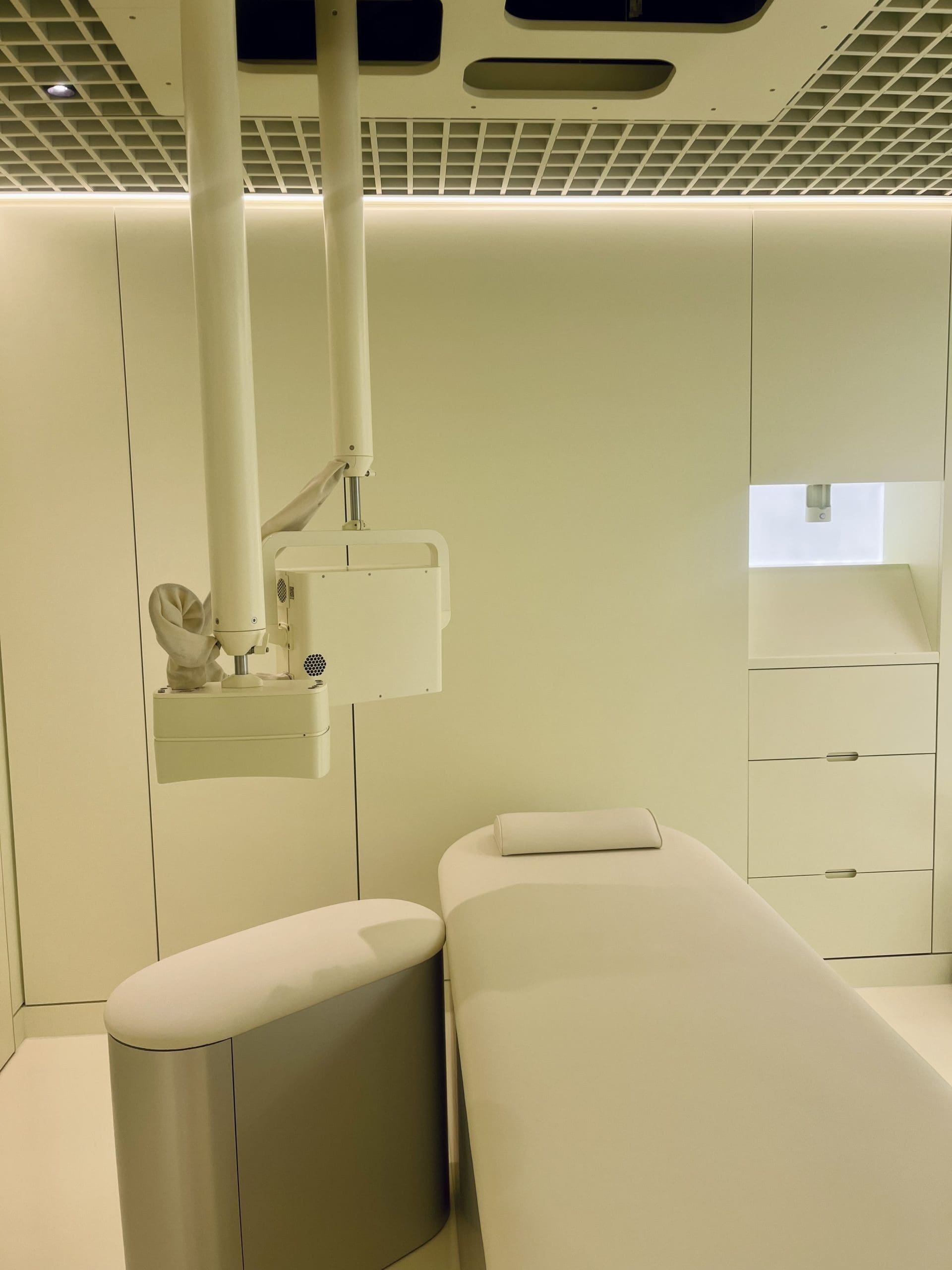
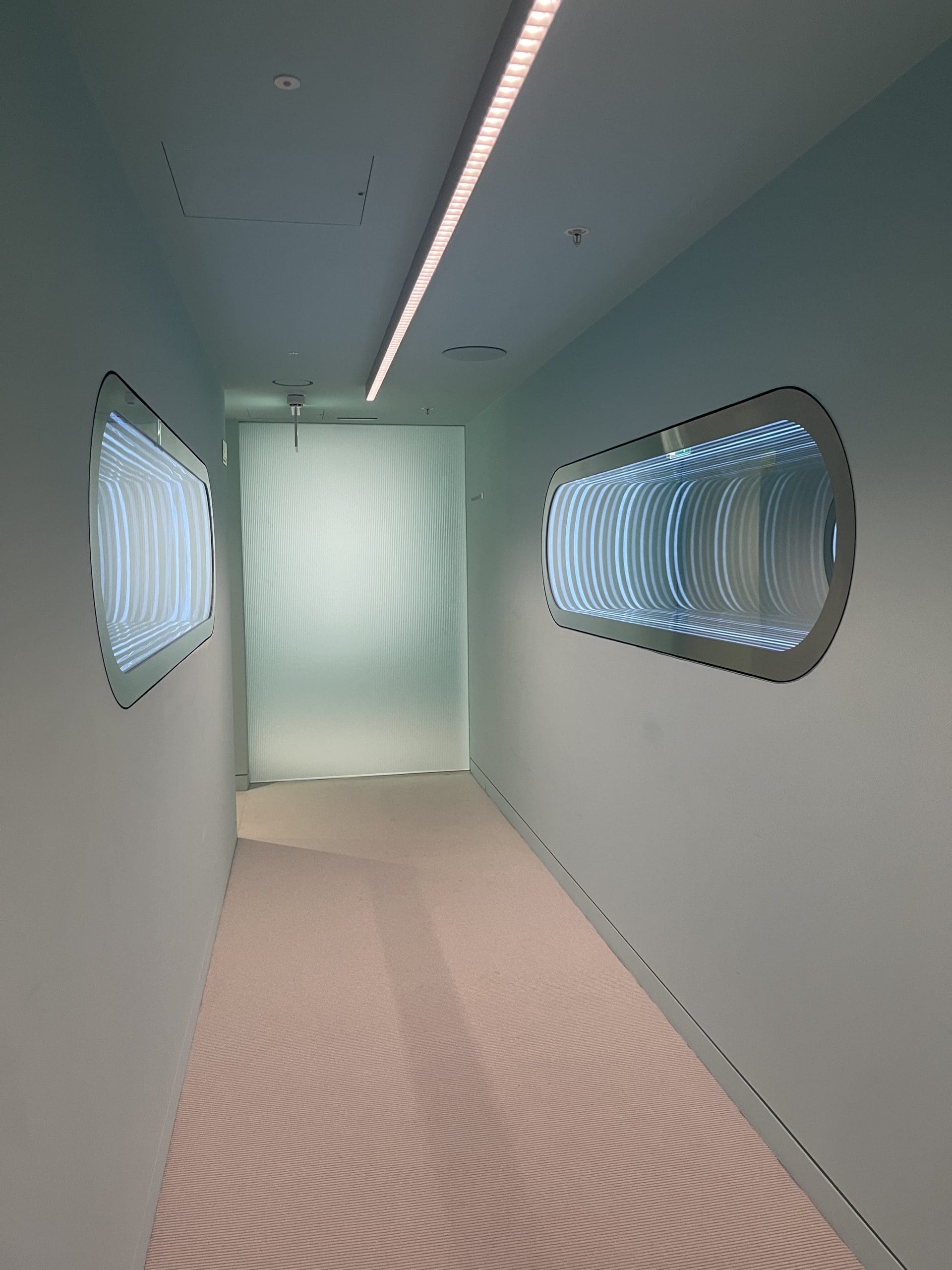
I visited the Covent Garden clinic in London. From the moment you walk in, it feels calm, minimal, almost futuristic. You’re asked to swap your shoes for blue slippers, a small detail, but it sets the tone. I was introduced to my scan assistant, Sarah, who explained everything clearly and put me at ease straight away. You’re given a gown, and the scan begins.
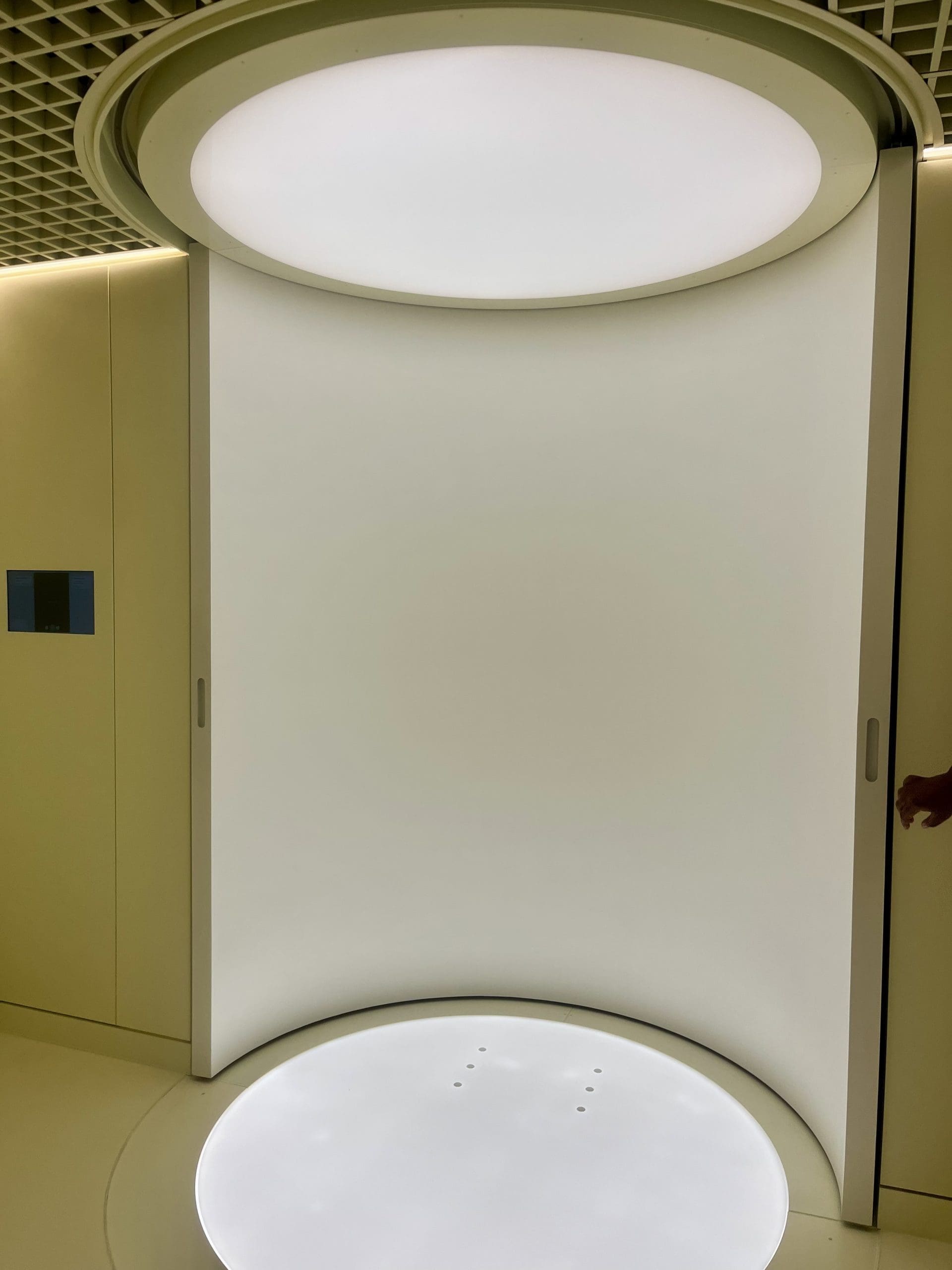
Over 2,000 images are taken of your body – front and back – followed by cardiovascular measurements, blood tests, metabolic analysis, grip strength, and eye pressure.
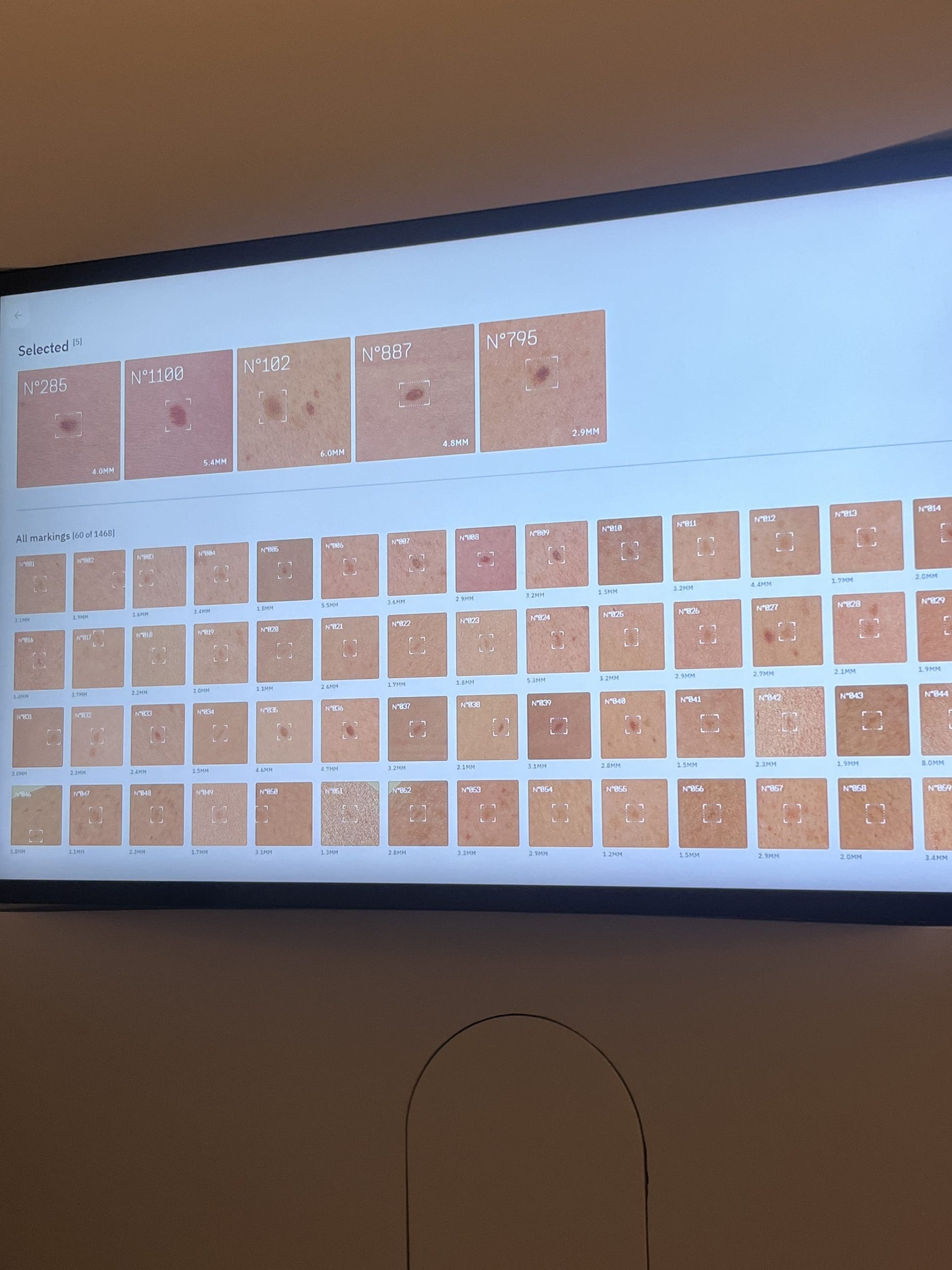
Then comes the doctor’s assessment. They carefully examine every mole on your body while listening to your heart. There’s a quiet communication between the doctor and assistant – subtle hand signals, numbers being passed back and forth. At this point, I’d be lying if I said I felt completely relaxed. There’s something about being analysed that closely that naturally raises your heart rate. You start wondering what they might find.
The Results
That underlying tension disappears pretty quickly once you’re taken into a separate room and shown your results on a large screen.
The doctor walked me through everything in detail, referring back to the concerns I’d raised in my pre-scan questionnaire.
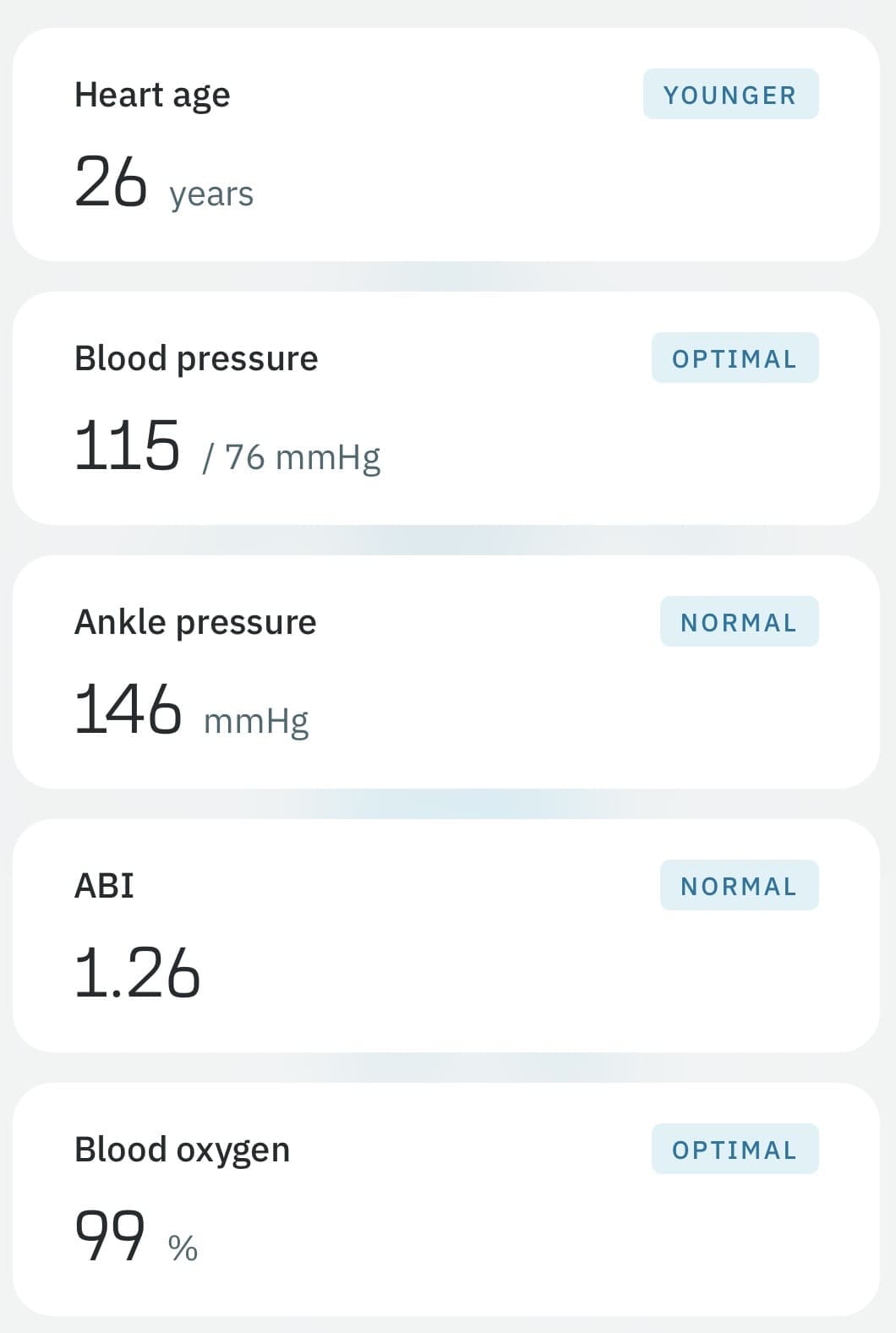
Overall, my results were strong.
- Inflammation markers: optimal
- Cholesterol: optimal
- Blood pressure: optimal
- Grip strength: Left hand: stronger than 90% of Neko users, Right hand: stronger than 70% – One unexpected perk of being left-handed. More than anything, it was reassuring. Not just hearing “you’re healthy,” but actually seeing the data behind it.
The Reason
For me, the biggest motivation was skin health.
I’ve always had a lot of freckles and moles, and over time I’ve noticed some changes. Add in a fair amount of tanning bed use in my early 20s, and it’s something that’s been on my mind.
The scan gave me something I’ve never had before: a full baseline.
I now know exactly how many markings I have and can track any changes over time. That alone made the experience feel worthwhile.
There’s also a family history of cancer, which means I naturally lean slightly towards the more anxious side when it comes to health.
For me, knowledge reduces that anxiety.
The Bigger Questions
After telling a friend about my experience, she challenged it.
She questioned whether knowing everything about your health is actually helpful or whether it feeds into a growing obsession with optimisation.
And she’s not wrong.
There’s something slightly dystopian about it all. The sleek tech. The data. The feeling of being scanned and assessed. It did, at times, feel like something out of Black Mirror, as if we’re heading towards a world where health becomes something quantified, ranked, even judged.
It raises bigger questions:
- Are we empowering ourselves or becoming overly dependent on data?
- Does this support public healthcare systems like the NHS, or slowly undermine them?
- If problems are caught earlier, does that reduce strain… or increase demand?
The Cost of Optimising Health
Then there’s accessibility.
At £299, I personally think the scan offers strong value for what you get. But it’s still a significant cost and not one that’s accessible to everyone.
That raises an important point.
As health technology advances, are we creating a wider gap between those who can afford to optimise their health… and those who can’t?
From advanced scans to medications like Ozempic and peptides, there’s a growing trend of “pay-to-improve” health.
And while these innovations are impressive, they also highlight a deeper issue, that health, increasingly, is becoming something you can buy.
Final Thoughts
I really enjoyed the experience.
It gave me clarity, reassurance, and a level of insight I’ve never had before. As someone who values performance, longevity, and understanding my body, it felt aligned with how I approach training and health.
Neko Health sits right at the intersection of innovation and ethics. It represents a shift towards proactive healthcare, which is exciting but also raises important questions about accessibility, data, and how far we want to take optimisation.
For now, I see it as a tool. Not something to obsess over. Not something to rely on completely. But something that, when used well, can help you understand your body a little better and maybe, just maybe, stay one step ahead.